A Summer’s End – Hong Kong, 1986
Play A Summer’s End – Hong Kong, 1986
A Summer’s End – Hong Kong, 1986 Screenshots







A Summer’s End – Hong Kong, 1986 review
Explore the Captivating Romance Visual Novel Set in 1980s HK
Dive into A Summer’s End – Hong Kong, 1986, the mesmerizing visual novel that captures the electric vibe of 1980s Hong Kong through a tender romance between two women, Michelle and Sam. I still remember my first playthrough—rain-slicked streets of Mong Kok and Sai Kung’s serene seascapes pulled me right in, blending lush art with a heartfelt story of love, identity, and family pressures. This guide uncovers everything from interactive dialogues and dual endings to the optional adult patch that amps up the intimacy. Whether you’re a retro anime fan or craving a poignant queer tale, discover why this gem stands out in the visual novel scene.
What Makes A Summer’s End Hong Kong 1986 Unforgettable?
I still remember the first time I booted up A Summer’s End – Hong Kong 1986. It was a rainy afternoon, and within minutes, the pixelated glow of a neon sign and the soft synth of city pop didn’t just appear on my screen—they wrapped around me. I was no longer in my room; I was transported. The humid air of 1980s Hong Kong, the buzz of a society on the cusp of change, the palpable tension of a fleeting season… it all clicked. Ever felt that instant spark with a piece of media that feels less like a game and more like a memory you never lived? That’s the magic this 1986 Hong Kong visual novel weaves.
So, what is it about this experience that sticks with you long after the credits roll? It’s not just one element, but a perfect, poignant blend of character, place, and time. Let’s dive into what makes A Summer’s End – Hong Kong 1986 an unforgettable journey.
Who Are Michelle and Sam?
At the heart of this unforgettable experience are two women whose lives collide with the gentle, fateful force of a summer storm. To understand what is A Summer’s End game really about, you have to start with them.
Michelle is someone you might recognize 🏙️. She’s a young office worker, dressed in smart blazers and navigating the expectations of her traditional family. Her life is a checklist of should-dos, yet there’s a quiet yearning for something more, something that feels authentically hers. She’s cautious, a little world-weary, and carries the weight of familial duty on her shoulders.
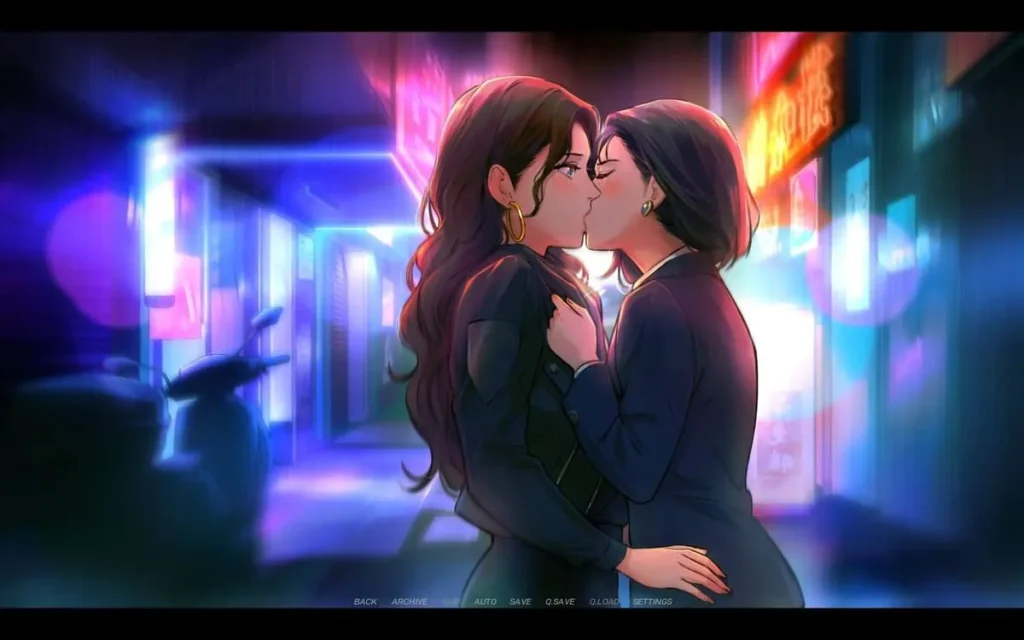
Then there’s Sam 💫. Brash, confident, and dripping with a coolness borrowed from 80s movie heroines, she’s a vision in leather jackets and effortless style. She represents a freedom Michelle can only observe from a distance. A chance meeting in a video store—over a Jackie Chan film, no less—ignites a connection that neither expects.
The Michelle and Sam story is powerful because it feels startlingly real. Their chemistry isn’t built on grand declarations, but on hesitant glances, shared silences that speak volumes, and conversations that feel like you’re eavesdropping on something profoundly private. Sam challenges Michelle’s guarded world, while Michelle offers Sam a glimpse of stability and depth. Their dynamic is the engine of this yuri romance game, making every dialogue choice feel immensely personal.
How Does the Story Unfold in 1986 Hong Kong?
The narrative of A Summer’s End – Hong Kong 1986 is a masterclass in subtle, player-driven storytelling. You guide Michelle through several pivotal weeks in the summer of 1986, a time when Hong Kong was a vibrant cultural melting pot facing an uncertain future.
The story unfolds through your choices. Dialogue options aren’t about good or evil, but about connection and vulnerability. Will Michelle open up about her family pressures? Will she lean into the attraction she feels for Sam, or pull away out of fear? These decisions build an invisible points system that quietly steers the relationship toward one of two destinies.
The central conflicts are deeply relatable: navigating conservative family expectations, the silent struggle with cultural identity, and the subtle, ever-present shadow of homophobia in a traditional society. Remarkably, the game handles these heavy themes without resorting to tragedy—it’s about resilience, quiet courage, and the choice to pursue happiness.
This all builds toward the Hong Kong 1986 endings, which are two sides of the same poignant coin:
* The True Romantic Ending: A culmination of trust and choice, often symbolized by a beautiful, cathartic romantic rain scene. It’s a moment of sheer, earned joy that will have you cheering.
* The “Bad” Ending: A more somber, realistic path where fear and duty win over heart. It’s not about villains, but about the paths not taken, and it’s just as powerful and moving.
The key themes that make this story resonate are:
* Love at first sight that deepens into something real and challenging.
* Family pressures that feel like tangible walls around the heart.
* A quest for cultural identity amidst a city’s own identity crisis.
* The iconic, hopeful romantic rain scene that serves as a emotional turning point.
To see how your choices shape their summer, here’s a look at the path to the game’s conclusions:
| Your Choices As Michelle… | Lead Toward This Ending… | The Defining Moment |
|---|---|---|
| Consistently choosing openness, support, and romantic courage with Sam. Engaging deeply with her world. | The True Romantic Ending 🥰 | A powerful, cinematic confession in the rain—a kiss that feels like a victory. |
| Prioritizing family duty, yielding to fear, or creating distance in key moments. | The “Bad” or Separate Ending 😢 | A parting of ways that is quiet, bittersweet, and hauntingly realistic. |
Why the 80s Aesthetic Hooks You Instantly
You can’t talk about A Summer’s End – Hong Kong 1986 without praising its breathtaking visual and auditory soul. This isn’t just a backdrop; it’s a vital character. The game is a love letter to a specific time and place, and every pixel pulsates with that affection.
The art style is a stunning fusion of influences 🎨. You can see the bold lines and dramatic framing of classic Hong Kong cinema (think Wong Kar-wai’s moody romanticism) dancing with the expressive character design of 80s anime. The environments are painstakingly researched and recreated. You’ll wander through:
* The neon-lit chaos of Mong Kok, with its crowded markets and glowing signs.
* The tranquil, sprawling seascapes of Sai Kung, offering moments of quiet reflection.
* Cozy, intimate spaces like apartments and cafes that feel lived-in and real.
And then there’s the soundtrack 🎶. Oh, the soundtrack! It’s a seamless flow of smooth city pop, nostalgic synth-wave, and softer, emotional piano pieces. The music doesn’t just accompany scenes—it defines them. A driving bassline captures the thrill of a night out, while a melancholic tune underscores a moment of doubt. It’s the kind of score you’ll find yourself listening to long after playing, just to recapture that summer feeling.
This commitment to aesthetic is why the game feels so immersive. It’s not trying to be a history lesson; it’s an emotional recreation of an era’s vibe. It hooks you because it’s beautiful, authentic, and steeped in a nostalgic cool that is utterly irresistible.
My Personal Insight? Playing A Summer’s End – Hong Kong 1986 feels less like playing a game and more like finding a beautifully illustrated diary from another life. The Michelle and Sam story lingers like the memory of a perfect, bittersweet summer fling—you remember the warmth, the music, the electric tension of almost-touching, and the poignant beauty of it being both fleeting and eternal.
🎮 Actionable Tip for Your Playthrough: Once you’ve seen an ending, replay key scenes from the gallery with Sam’s perspective enabled. It’s a fantastic feature that adds layers of meaning to her words and actions, offering fresh revelations and making the yuri romance game feel brand new again. You’ll understand her silences and her smiles in a whole new light.
“The subtle tension in dialogues mirrors real-life East Asian conversations—where what is unsaid holds more weight than the words spoken. It’s that authenticity that makes their love story hit so deep.”
Reliving A Summer’s End – Hong Kong, 1986 feels like stepping into a vibrant memory—Michelle and Sam’s journey through love, self-discovery, and 80s Hong Kong charm lingers long after the credits. From neon streets to intimate moments, it masterfully blends heartfelt storytelling with stunning visuals and choice-driven paths. My take? It’s more than a game; it’s a nostalgic escape that celebrates queer joy amid challenges. Grab the adult patch for extra depth, fire it up, and let the summer romance sweep you away. What’s your ending—true love or bittersweet? Share in the comments and join the conversation!