Good Girl Gone Bad
Play Good Girl Gone Bad
Good Girl Gone Bad Screenshots
















Good Girl Gone Bad review
Master the branching storyline, character relationships, and multiple endings in this interactive visual novel
Good Girl Gone Bad is an interactive visual novel that puts you in control of Ashley Graham’s destiny. Created by Eva Kiss, this game combines hand-crafted artwork with a complex, branching narrative that adapts based on your choices. Whether you’re interested in exploring the game’s mechanics, understanding character relationships, or discovering the multiple endings available, this guide covers everything you need to know about this choice-driven adventure. The game challenges players to navigate moral decisions that significantly impact the story’s direction and outcomes.
Understanding Good Girl Gone Bad: Game Overview & Core Mechanics
So, you’ve clicked on this guide, and I’m willing to bet I know why. Maybe you, like me, started playing Good Girl Gone Bad thinking it would be a simple, cheeky story, only to find yourself staring at the screen ten minutes later, paralyzed by a single choice. “Do I study for the test or go to the party?” suddenly feels like a decision that will reshape your entire virtual life. That was my first “aha” moment with this game. I picked the party, of course, and the cascading consequences were more profound and engaging than I ever expected. This isn’t just a visual novel; it’s a masterclass in interactive storytelling where every click feels weighted with possibility.
Welcome to your foundational guide. Before we dive into specific walkthroughs or ending strategies, we need to understand the engine under the hood. This chapter is all about demystifying the core systems that make this Good Girl Gone Bad visual novel such a captivating experience. Think of it as learning the rules of the road before you take a cross-country trip. Buckle up! 🚗
What Makes This Visual Novel Unique
At first glance, you might slot Good Girl Gone Bad into a familiar category. But within minutes, its distinct personality shines through. The most immediate difference is its aesthetic. Forget sterile 3D models; this game is built with beautifully hand-drawn assets. Every character, every background, every piece of clothing feels organic and full of personality. This art style lends a raw, almost intimate quality to the story, making the world and its inhabitants feel more tangible and real.
You step into the shoes—and the evolving wardrobe—of Ashley Graham. Ashley isn’t a blank slate; she arrives with her own history, anxieties, and a life that feels palpably real. She’s a college student grappling with financial pressure, social dynamics, and the tantalizing lure of rebellion. Your role isn’t to overwrite her, but to guide her through a critical turning point. This is where the genius of the interactive story game mechanics comes into play. The game presents you with Ashley’s internal monologue and external choices, and you decide which path her personality will bend toward.
The narrative structure is a sprawling web of branching narrative choices. It’s not about “good” or “evil” in a cartoonish sense, but about identity, desire, and consequence. Will Ashley prioritize her studies and her longtime boyfriend? Will she explore new, more daring relationships? Will she embrace financial shortcuts that challenge her morals? Each decision acts like a fork in the road, closing off some avenues while blazing new trails. I remember replaying a single day three times, choosing different conversation options with her friend, and each time it led to a completely different social opportunity by the weekend. The story genuinely branches, creating a highly personalized experience.
Pro Tip: Don’t try to “win” on your first playthrough. The true joy of this Good Girl Gone Bad gameplay loop is in the exploration. Make choices that feel true to a version of Ashley you want to see, and embrace the surprises.
Character Progression & Relationship Systems
If the story is the destination, your relationships are the vehicle. The character relationship system in this game is deep, nuanced, and utterly essential to unlocking the full scope of the narrative. Every major character—from Ashley’s devoted boyfriend and strict mother to her rebellious best friend and various new acquaintances—has a dynamic relationship meter that changes based on your actions, dialogue, and even your attire.
These aren’t simple “like/dislike” meters. Interactions build affinity, trust, romance, or dominance. Choosing to confide in a character might boost their “Trust” stat, while flirting with them builds “Romance.” Critically, improving your relationship with one person can sometimes strain it with another, reflecting the messy reality of social circles. The game’s mature content is woven directly into this fabric; intimate moments are rarely just rewards, but narrative turning points that significantly alter relationship dynamics and open up new story branches.
Understanding character “types” is key. A conservative character might be offended by revealing outfits, while a more rebellious one might be drawn to them. Your choices need to be contextual. I learned this the hard way when I tried to impress a certain character by being bold and outgoing, only to find they valued sincerity and vulnerability instead. It’s this depth that makes every interaction a mini-puzzle.
To help you navigate this social landscape, here’s a breakdown of key character archetypes and how they operate:
| Character Type | Core Relationship Mechanics | How They Affect Story Outcomes |
|---|---|---|
| The Traditionalist (e.g., Mom, Boyfriend) | Responds to “Good” points, respectful dialogue, and conservative appearance. Values stability and promises. | High rapport unlocks supportive storylines, financial help, or stable endings. Low rapport can lead to conflict-driven narratives and dramatic breakaways. |
| The Liberator (e.g., Rebellious Friend) | Drawn to “Bad” points, daring choices, and bold fashion. Encourages rule-breaking and new experiences. | Strong bonds unlock exclusive party scenes, alternative money-making avenues, and endings centered on freedom and self-discovery. |
| The Authority Figure (e.g., Professor, Boss) | React to respect and competence. Mix of professional and personal triggers; some may respond to subtle flirtation or assertiveness. | Critical for academic or job-related success. Can provide unique opportunities, references, or become part of complex power-dynamic subplots. |
| The Romantic Interest (Various) | Requires consistent attention, specific choice patterns, and often a balance of personal traits. Each has unique “preferences.” | Directly leads to romance-specific endings. Your standing with them can block or enable other relationships, creating love triangles or dramatic confrontations. |
Gameplay Mechanics: Points, Money & Experience
Beneath the captivating story and complex relationships lies a robust set of interactive story game mechanics that give your choices tangible weight. This isn’t just about picking dialogue; it’s about managing Ashley’s resources, reputation, and skills. Let’s break down the three core systems: Points, Money, and Experience.
The Duality of Points: Your Moral Compass 🧭
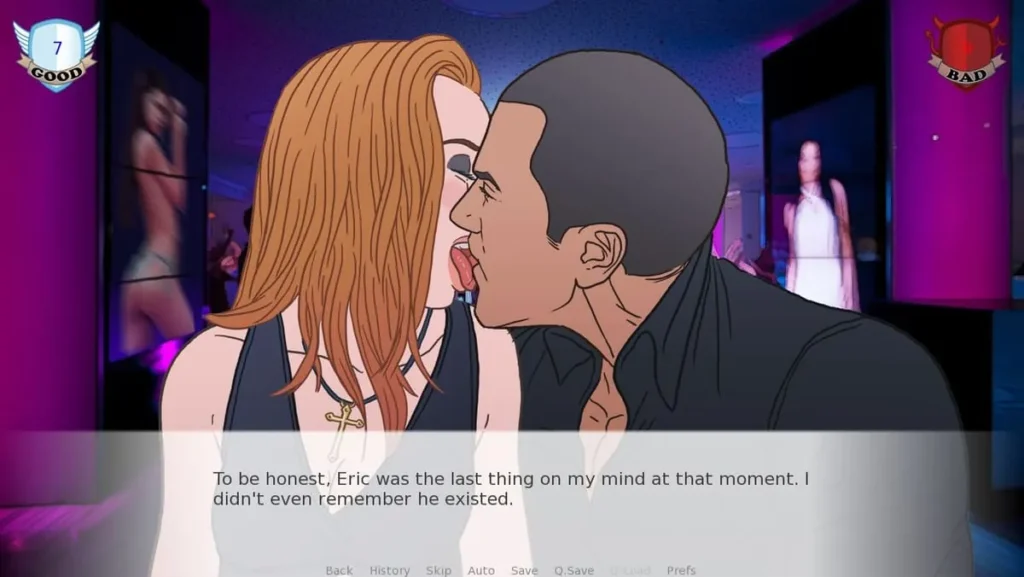
The visual novel points system is elegantly simple yet profoundly impactful. You earn two primary types of points: Good Points and Bad Points. These aren’t judgments, but trackers of Ashley’s evolving behavior.
* Good Points are earned through responsible choices: studying, being loyal, keeping promises, and dressing modestly in certain situations.
* Bad Points come from rebellious acts: skipping responsibilities, lying, being promiscuous, or wearing daring outfits.
These points are gatekeepers. Many branching narrative choices in the story are locked behind having a sufficient number of either Good or Bad points. Want to choose a particularly wild option at a party? You might need 15 Bad Points to even see it. Need to access a wholesome, supportive conversation with a loved one? That might require 10 Good Points. This system ensures your playthrough remains coherent—Ashley can’t suddenly become a radical rebel if all her previous choices have been saintly, and vice-versa. It directly feeds into the game’s multiple endings, determining which finale paths are available to you.
Financial Fuel: How to Earn Money in Good Girl Gone Bad
Ashley’s college life isn’t cheap, and how to earn money in Good Girl Gone Bad becomes a central, recurring puzzle. Currency is needed for everything from crucial bills and rent to new clothes, gifts, and social activities. The game offers a variety of jobs and activities, each with its own implications:
* Traditional Jobs: Waitressing, library work, etc. These are reliable but lower-paying and often consume time that could be used for social or study activities.
* Alternative Methods: Modeling, webcam work, or other risky ventures. These typically pay much more and can align with a “Bad Points” path, but may damage relationships with certain characters or lock you out of “good” story branches.
* Gifts & “Help”: Sometimes, characters may offer you money, but this often comes with strings attached, affecting your relationship dynamic.
Your approach to earning cash is a major role-playing element. A “good” playthrough might involve frugality and hard work at a slow job, while a “bad” path might see Ashley chasing quick cash through riskier means. I found that balancing a part-time job with the occasional lucrative, character-specific “opportunity” was the most narratively interesting mix.
Experience & Skills: The Silent Progress
Alongside points and money, Ashley gains Experience (XP) from almost everything she does. Studying gives Academics XP. Socializing gives Charisma XP. Certain jobs give specific skill XP. This is a more subtle system, but it’s crucial for Good Girl Gone Bad gameplay depth.
* Outfit Effects: What you wear isn’t just cosmetic. Different outfits provide stat boosts (e.g., a stylish dress might boost Charisma XP gains at a party, while glasses and a sweater boost Academics XP in the library).
* Unlocking Actions: Higher skill levels can unlock new dialogue options or activities. High Academics might let you ace a test without studying, while high Charisma could give you a unique persuasive option in a tense conversation.
* Synergy: Your outfit, location, current relationship levels, and chosen activity all interact. Hanging out with a friend who likes “bad” behavior while wearing a daring outfit at a club will maximize gains in rebellious traits and relevant relationship paths.
To keep all these spinning plates in mind, here’s a handy checklist of the key gameplay systems you should always be monitoring:
- Points Tracking: Regularly check your Stats screen. Are you building toward the Good or Bad threshold needed for your desired story path?
- Money Management: Plan major purchases. Do you need a new outfit for a specific event? Do you have rent due soon? Your financial stress is part of Ashley’s story.
- Experience Gains: Pay attention to the XP pop-ups. Are you spreading yourself too thin, or specializing in a skill set that fits your Ashley?
- Outfit Effects: Before any significant event, check your wardrobe! The right outfit is a tool, not just a costume. It can be the difference between succeeding at a job interview or charming a potential romantic partner.
Mastering these interconnected systems—the character relationship system, the visual novel points system, and the economic and experience loops—is what transforms you from a passive reader into the architect of Ashley’s story. It’s what makes every playthrough of this Good Girl Gone Bad visual novel feel uniquely yours. Now that you understand the rules of the game, you’re ready to start playing with purpose. In the next chapters, we’ll use this foundation to navigate specific days, build (or break) relationships, and steer toward those elusive multiple endings. Happy exploring! 🌟
Good Girl Gone Bad stands out as a complex interactive visual novel that rewards player engagement through meaningful choices and consequences. The game’s hand-drawn art style, deep character relationships, and branching narrative create a unique experience where your decisions genuinely shape Ashley Graham’s story. Whether you’re pursuing a specific ending, exploring different relationship paths, or discovering hidden scenes, understanding the game’s mechanics—from the points system to outfit effects—enhances your gameplay experience. The multiple playthroughs available ensure that each decision path reveals new story elements and character interactions. If you’re looking for a choice-driven narrative experience with substantial replay value, Good Girl Gone Bad delivers a morally complex story that adapts to your playstyle. Start your journey today and discover how your choices define Ashley’s path.