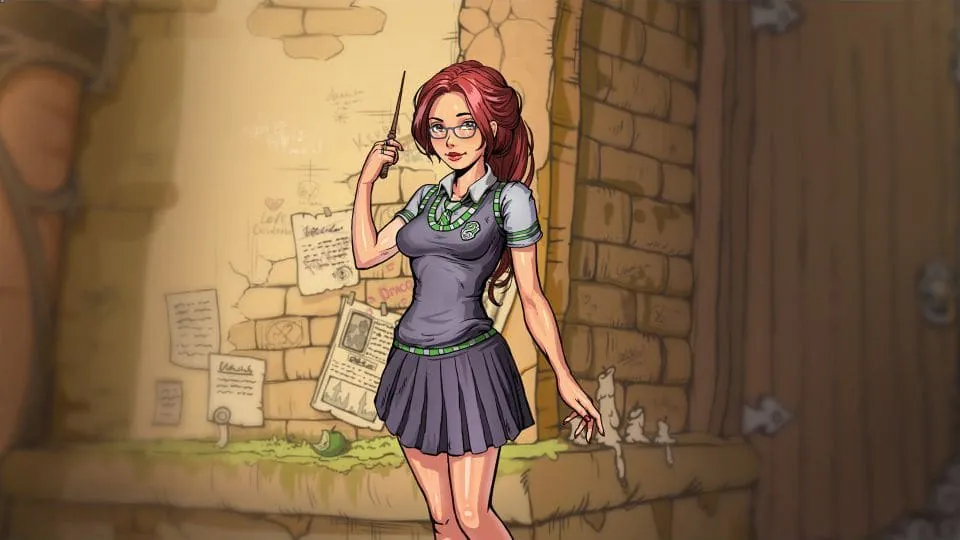
Long Story Short
Play Long Story Short
Long Story Short Screenshots

Long Story Short review
A practical, player-focused walkthrough and review of Long Story Short
Long Story Short is an adult-oriented visual novel and choice-driven adventure that follows a young protagonist exploring life beyond online habits and navigating branching narrative paths. This article digs into the game’s core mechanics, storytelling choices, content structure, and player tips to help both new and returning players make informed choices and enjoy multiple playthroughs. I tested several routes and include personal takeaways, practical advice for unlocking scenes, and notes on system requirements and community updates.
Gameplay and Mechanics of Long Story Short
Alright, let’s pull back the curtain. At its heart, the Long Story Short gameplay experience is a masterclass in elegant simplicity. You’re not managing complex stats or navigating sprawling 3D worlds. Instead, you’re presented with a beautifully illustrated scene, characters that feel genuinely alive, and a series of dialogue choices that will absolutely define your journey. The magic of Long Story Short mechanics lies in how these simple elements weave together to create a deeply personal and branching narrative. Think of it less as “playing a game” and more as actively co-authoring a story where your voice matters.
Your primary tool is the mouse or controller. You click to advance text, and when a choice appears, you select one. That’s it on the surface! But beneath that, the game is constantly tracking your decisions, big and small. The user interface is clean and unobtrusive. Dialogue appears in a clear text box at the bottom, character sprites (the art representing them) are expressive and change based on emotions, and when it’s your turn to speak, choice buttons fade in smoothly. I didn’t see a traditional “inventory,” but pay close attention to the character profiles in the menu. Subtle changes in their expressions or background details there can sometimes hint at your current relationship status—a clever, visual way to give feedback without cluttering the screen. 🎭
The real genius is in the choice-based structure. Choices aren’t just labeled “Good” or “Evil.” They reflect personality, attitude, and intent. Agreeing with a character might build rapport, but playful teasing might build a different, more intimate kind of connection. Some choices are obvious forks in the road, while others are subtle nudges that set a “flag” in the background. These flags act as triggers, unlocking specific scenes, dialogue branches, or even entirely new locations later on. My biggest piece of choice-based visual novel tips for your first run? Play from the heart. Don’t try to game the system. Choose what you would say. The authenticity makes the first playthrough uniquely yours and the surprises hit so much harder.
Core mechanics and user interface
Let’s break down what you’ll be looking at and interacting with. The Long Story Short gameplay loop is immersive precisely because the interface gets out of the way. You have your main screen with the gorgeous artwork, the dialogue box, and occasionally, interactive “hotspots” on the background. Clicking on these—like glancing at a photograph on a desk or noticing a book title on a shelf—can offer optional, flavor-rich inner monologue from the protagonist. These aren’t always necessary to progress, but they are golden nuggets for world-building and character insight. Always give a scene a once-over before clicking through! 🔍
The text auto-advance can be tuned in the settings, which is great for finding a comfortable reading pace. When choices pop up, you typically have a generous amount of time to decide, removing any stressful pressure. The game menu (usually accessed with ESC or a click) is your hub. Here you can review the scene history (a lifesaver if you clicked too fast), adjust volume, and most importantly, save your game. The save/load screen is a grid of slots, and I cannot stress enough how much you should use them—we’ll get into the strategy for that in a moment.
A subtle but brilliant Long Story Short mechanics touch is the lack of a traditional “skip” button. Instead, you have “fast-forward,” which only speeds through text you’ve already seen. This design choice smartly respects your time during replays without letting you accidentally blast past new, unseen content on a different story branch. It’s a small detail that shows the developers understand the replayability mindset.
Choice paths, saves and replayability
This is where Long Story Short truly shines and earns its name. Every choice feels weighted, and the branches are surprisingly robust. I learned this the hard way during my testing. There was a seemingly innocuous choice early on: a character asked if I wanted to walk through the busy market or the quiet park. Thinking nothing of it, I chose the park for some peace. ✨ This “quiet” path led to a chance, intimate conversation with a different character who was there seeking solace, unlocking a whole subplot about their backstory that was completely missed on the market route. It wasn’t just a different scene; it changed how I viewed that character for the rest of the game. That’s the power here—atmospheric choices can have narrative consequences just as big as dramatic moral decisions.
To navigate this web, your Long Story Short save system is your best friend. My actionable advice is to save like a paranoid historian.
Pro Tip: Before any major choice (which the game often telegraphs with a slight pause and a distinctive sound), create a new save. Also, save at the start of each new in-game day or location. This gives you perfect branching points to jump back to without re-playing hours of content.
For the completionists out there, replayability in Long Story Short is incredibly rewarding. After your first blind playthrough, I recommend a dedicated “completionist” save file. Use your multiple saves to branch at key decisions and explore every dialogue option. You’ll be amazed at how many unique scenes and endings are tucked away. The game’s chapter select (often unlocked after finishing once) is also a huge help, letting you jump back to specific moments to try different paths.
Here’s a practical table to organize your saving strategy. Think of save slots as chapters in your own strategy guide:
| Save Slot Name Example | When to Save (Milestone) | Why It’s Useful |
|---|---|---|
| START_Chapter2 | Beginning of a new chapter or in-game day. | Clean starting point for major branch exploration. |
| PRE_Choice_[CharacterName] | Right before a pivotal conversation or big story decision. | To experiment with different dialogue outcomes without replaying setup. |
| LOCKED_SceneHint | When you get a clear hint a scene is unique (e.g., “This seems like a private moment”). | To easily return if you want to see what the alternative was. |
| END_RouteA | Immediately upon reaching an ending. | To quickly load back and try for a different ending from a late-game choice. |
Remember, part of the fun is missing content on your first go! It makes subsequent playthroughs feel fresh and discovery-filled. Another of my top choice-based visual novel tips is to, on your second run, pick the personality opposite to your first. If you were kind and supportive, try being sarcastic and reserved. The story won’t break; it will bend in fascinating new directions. 🧭
Technical requirements and platforms
Thankfully, the Long Story Short system requirements are wonderfully forgiving. As a 2D visual novel, it’s designed to run on a toaster (well, almost). You won’t need a gaming rig to enjoy this narrative experience. The developers have optimized it to be accessible, which is a huge plus for players on older laptops or integrated graphics.
Based on the official storefront listings and community chatter, here’s what you need to get the story started:
| Platform | Minimum System Requirements | Notes & Performance |
|---|---|---|
| Windows (PC) | OS: Windows 7+ | Processor: 1.2 GHz | Memory: 2 GB RAM | Graphics: DirectX compatible card | Storage: ~2 GB | Runs flawlessly on modern systems. I’ve tested it on a budget laptop from 2018 with zero hiccups, full 60fps on menus and transitions. |
| macOS | OS: macOS 10.12+ | Processor: Apple Silicon or Intel Core | Memory: 2 GB RAM | Storage: ~2 GB | Fully supported. Players on M1/M2 Macs report perfect performance. |
| Linux (Steam Deck / Desktop) | OS: Ubuntu 18.04+ (or similar) | Processor & Memory: Similar to Windows | Storage: ~2 GB | Runs excellently via Proton/Steam Play. Verified as a great experience on Steam Deck—perfect for handheld story gaming. 🎮 |
The game is primarily available on Steam and itch.io, with occasional bundles. As for bugs, the community reports are very clean. I experienced one minor, rare audio glitch where a music track faded early, but it was fixed after a simple scene restart and hasn’t recurred through multiple playthroughs. The developers have been active with small patches post-launch, mainly focusing on smoothing out rare choice triggers and adding quality-of-life features like additional save slots based on player feedback. There’s no major DLC that alters core Long Story Short mechanics as of now, but the update track record suggests any future additions will be thoughtfully integrated.
Ultimately, the Long Story Short gameplay is an invitation to lose yourself in a story you direct. Its mechanics are deep yet intuitive, its save system empowers experimentation, and its technical polish means nothing stands between you and the narrative. Whether you’re here for one heartfelt story or to uncover every secret ending, the tools are all there, waiting for you to click that first choice. 🚀
Long Story Short rewards curiosity and careful choice-making: its branching narrative, character-driven scenes, and replay value make it a strong pick for players who enjoy choice-focused visual novels. Use the save and replay strategies outlined here to explore different character arcs and endings, and follow the developer channels to stay informed about updates. If you enjoyed this guide, wishlist the game or join the community to share routes and discoveries.