
Project QT Screenshots




Project QT review
Master gameplay systems, character evolution, and combat strategies in this mobile RPG
Project QT stands out as a distinctive mobile RPG that blends match-3 puzzle mechanics with character-driven narratives and strategic combat systems. This game appeals to players who enjoy both tactical gameplay and immersive storytelling, offering a unique experience that rewards skill, planning, and character customization. Whether you’re new to the game or looking to optimize your strategy, understanding the core mechanics and character evolution systems is essential for long-term engagement. This guide explores the fundamental gameplay elements, character development paths, and strategic approaches that will help you progress effectively and enjoy everything Project QT has to offer.
Understanding Project QT’s Core Gameplay Mechanics
Ever feel like you’re just button-mashing through a mobile RPG, watching flashy animations but not really playing? I’ve been there. 🥱 When I first launched Project QT, I braced for another auto-battler where strategy took a backseat. Boy, was I wrong. The genius of this game lies in its hands-on, brain-engaging core gameplay mechanics that make you the true architect of every victory. It’s a brilliant fusion of classic puzzle-solving and deep role-playing systems.
At its heart, Project QT asks a simple question: what if your skill in a puzzle directly powered your team in battle? The answer is a refreshingly interactive loop that rewards smart thinking over mere stats. This chapter is your master key. We’re diving deep into the match-3 puzzle combat system, unraveling the intricate character evolution strategy, and exploring the vast strategic customization options that make every player’s journey unique. Whether you’re a puzzle pro or an RPG veteran, understanding these Project QT gameplay mechanics is your first step to domination. Let’s get into it! ⚔️
Match-3 Puzzle System and Combat Integration
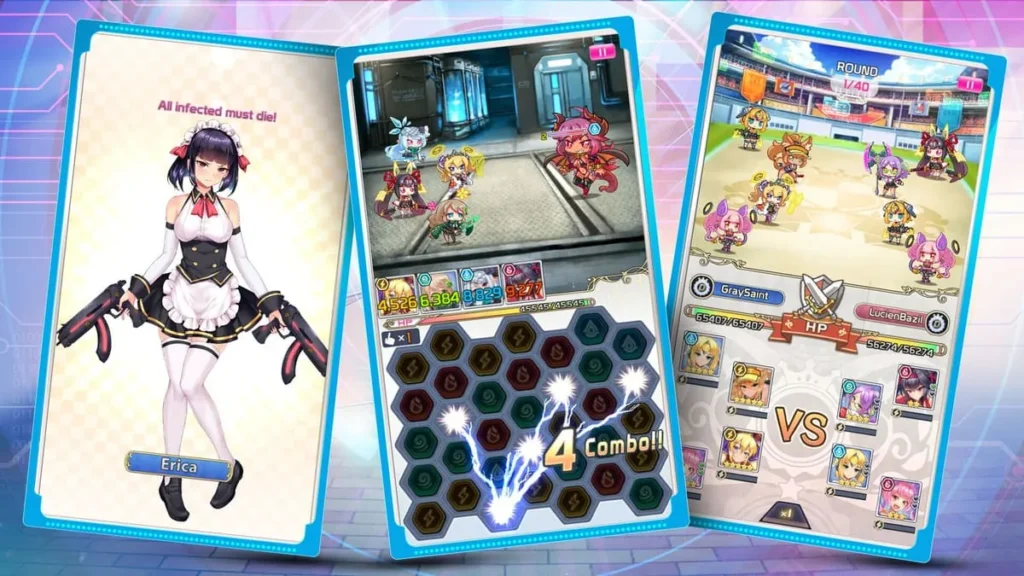
This is where Project QT truly separates itself from the pack. Forget passive skill cooldowns. Here, your combat effectiveness is tied directly to your puzzle-solving prowess in real-time. It’s not a separate mini-game; it’s the very engine of the Project QT combat systems.
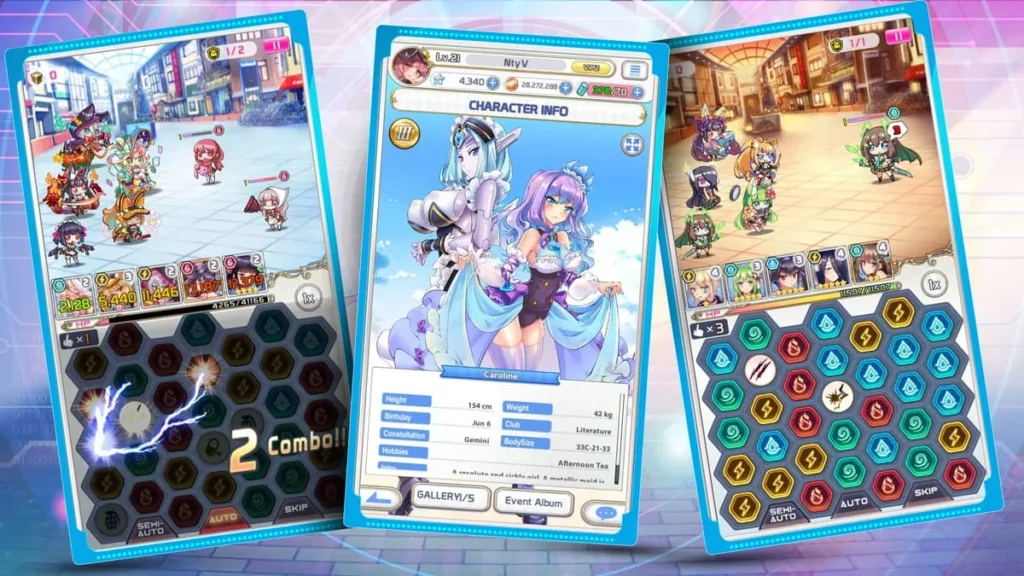
Think of the puzzle board as your dynamic command center. Each color gem corresponds to a specific character on your team. Making a match of three or more gems does two critical things: it charges that character’s powerful Special Skill, and it also builds towards a team-wide Awakening meter for a devastating ultimate move. 🧩💥 This creates a thrilling layer of tactical choice. Do you focus on matching blue gems to charge your healer’s vital recovery skill, or do you scramble to set up a cascade of red gems to unleash your attacker’s nuke?
The match-3 puzzle combat system introduces brilliant wrinkles that elevate it beyond a simple bejeweled clone:
* Skill Blocks: Special tiles that, when matched, grant bonus effects like bonus meter charge or damage reduction.
* Board Control: You can often see what gems are coming next, allowing for foresight and planning your combos.
* Combo Multipliers: Chaining matches together isn’t just satisfying; it multiplies the energy gained, rewarding skillful board manipulation.
I learned this the hard way during a early boss fight. I was solely focused on big, flashy matches for my damager, ignoring my support’s gems. When the boss enraged, my healer’s skill was only half-charged, and my team was wiped. That loss taught me that Project QT gameplay mechanics demand balance. You must manage the entire board, juggling the needs of all your characters simultaneously. It’s a dynamic, engaging mobile RPG progression system that measures your growth in both puzzle skill and tactical foresight.
Pro Tip: Always glance at your characters’ skill meters before making a move. Sometimes a simple 3-match to top off a crucial heal is smarter than chasing a potential 5-match combo for damage.
This seamless integration means every battle is active and engaging. Your victory isn’t guaranteed by overpowered characters; it’s earned by your quick thinking and strategic matching. This foundational system feeds directly into everything else, especially how you grow your team. 🚀
Character Evolution Trees and Progression Paths
So you’ve mastered the puzzle board and understand the flow of battle. Now, how do you make your characters stronger? This is where the game’s depth truly unfolds through its character evolution strategy. Unlike linear “level up, get stat boost” systems, Project QT offers branching evolution trees that let you customize each character’s role to an incredible degree.
Each character has three primary evolution branches, typically aligning with Attack, Defense, and Support archetypes. Investing evolution materials down a specific branch doesn’t just increase numbers; it unlocks transformative new abilities, enhances existing skills, and fundamentally changes how a character functions in your lineup. This is the essence of tactical character building.
Let’s break down a milestone in the mobile RPG progression with a concrete table. Here’s a generalized look at what unlocking new star levels through evolution can provide:
| Star Level | Evolution Milestone | Typical Unlocks & Impact |
|---|---|---|
| ⭐ → ⭐⭐ | Base Unlock | Unlocks the character’s Special Skill. The foundational step. |
| ⭐⭐ → ⭐⭐⭐ | Branch Choice Opens | You must choose your first evolution path (e.g., Attack or Support). Unlocks a second passive ability. |
| ⭐⭐⭐ → ⭐⭐⭐⭐ | Path Specialization | Significant stat leap and enhancement to your chosen path’s skills. Defines the character’s core role. |
| ⭐⭐⭐⭐ → ⭐⭐⭐⭐⭐ | Ultimate Evolution | Unlocks the powerful Awakening Skill (team ultimate). Often adds a game-changing third passive or massively boosts existing ones. |
Now, for a real-world example. Let’s talk about a fan-favorite Fire Mage-type character. Early on, she’s a straightforward damage dealer. But at her 3-star evolution fork, you face a classic tactical character building dilemma:
- Path A: Pyro Mastery (Attack Branch). This path doubles down on her offensive nature. It might upgrade her Special Skill to inflict a powerful Damage-Over-Time (Burn) effect and increase her puzzle gem damage for red matches. She becomes a premier boss killer. 🔥
- Path B: Flame Armor (Defense Branch). Here’s where it gets interesting. This path could transform her! It might change her skill to a shielding ability that protects your team while reflecting damage. Her role shifts from a backline glass cannon to a resilient support-mage hybrid.
I chose Path B for my mage, and it revolutionized my main team. I already had two pure attackers, but was lacking survivability. By evolving her for defense, she gave my squad the staying power to outlast tough PvE stages I was stuck on. This is the power of character evolution strategy—it allows you to patch your team’s weaknesses and create synergies that wouldn’t exist otherwise.
This system ensures long-term engagement. There’s always a new evolution goal, a new branch to explore on an alternate character, and a compelling reason to engage with all of the game’s content to gather those precious upgrade materials. Your mobile RPG progression is a story you write through these choices.
Strategic Customization and Build Variety
The evolution trees are just the beginning. The true endgame of Project QT’s depth is the combinatorial explosion of strategic customization options. This isn’t about finding one “meta” team and calling it a day. It’s about crafting a roster with specific tools for specific challenges, making tactical character building a constantly rewarding puzzle.
Your strategy is built on layers of choice:
1. Team Composition: The foundational layer. A balanced team (Tank, Healer, Damage) is reliable, but maybe you want a hyper-aggressive 4-attacker squad to burst down foes before they can act?
2. Evolution Paths: As we saw, this defines each member’s core function. You could have two of the same base character on one team, one built for attack and one for support, fulfilling completely different roles! 🤯
3. Gear and Artifacts: Equipping items that boost specific stats (like Crit Rate for attackers or HP% for tanks) lets you fine-tune characters even within their chosen branch.
4. Synergy Effects: Certain characters, when placed in a team together, unlock bonus stats or abilities. Discovering and exploiting these synergies is a huge part of advanced play.
Let’s paint a picture. Imagine you’re facing a Story Chapter boss that buffs itself massively every turn. A standard team might struggle. Your strategic customization options let you build a counter-team:
* Character 1: A supporter evolved down the “Silence” branch to lock down the boss’s buffing skill.
* Character 2: An attacker built for “Armor Break” to shred the boss’s high defense.
* Character 3 & 4: Flexible slots—perhaps a healer to sustain, and another damage dealer whose evolution lets them do extra damage to debuffed targets.
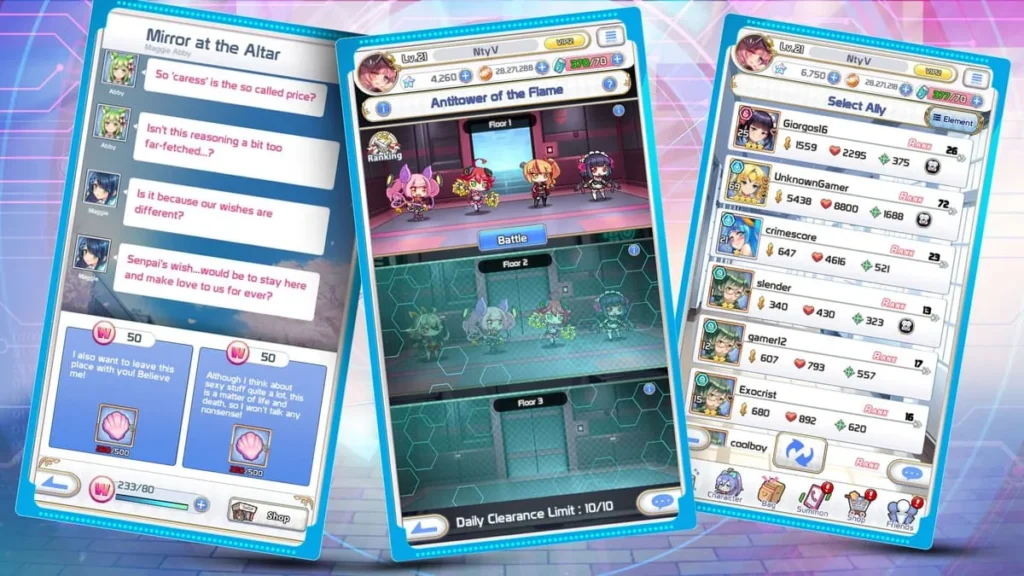
This tailored approach is what makes Project QT combat systems so rewarding. The game’s PvP arena becomes a thrilling mind-game of predicting the meta and constructing a team that can counter popular builds while having its own win condition. My proudest moment was taking a supposedly “B-tier” character, building my entire team’s character evolution strategy around enabling her unique mechanic, and climbing the arena ranks against teams with higher raw power.
The beauty is that the game supports this experimentation. While there’s a competitive edge, the narrative and event content encourage you to build wide, not just tall. You’re rewarded for raising a diverse roster to tackle different elemental challenges and unique stage mechanics. This design is key to player retention—there’s always a new combination to try, a new challenge that requires a fresh approach.
Mastering Project QT gameplay mechanics means embracing this sandbox of possibilities. Your progression is a blend of skillful puzzling and deep strategic planning. From the instant, tactical decisions on the match-3 puzzle combat system board to the long-term plans of your mobile RPG progression, you are in full control. Dive into those evolution trees, experiment with wild team comps, and most importantly, have fun crafting your own path to victory. Your uniquely built squad is waiting for your command! 👑🎮
Project QT delivers a compelling experience by combining strategic puzzle-solving with deep character customization and narrative progression. The game’s evolution system rewards thoughtful planning, allowing players to tailor their teams to their preferred playstyle through distinct Attack, Defense, and Support branches. Understanding these core mechanics—from match-3 combat integration to character development paths—provides the foundation for enjoying everything the game offers. Whether you prioritize building a powerful DPS team or creating a balanced squad with strong support characters, the customization options ensure long-term engagement. As you progress through Project QT, remember that strategic thinking about character evolution and team composition will significantly enhance your gameplay experience and success in challenging encounters.